
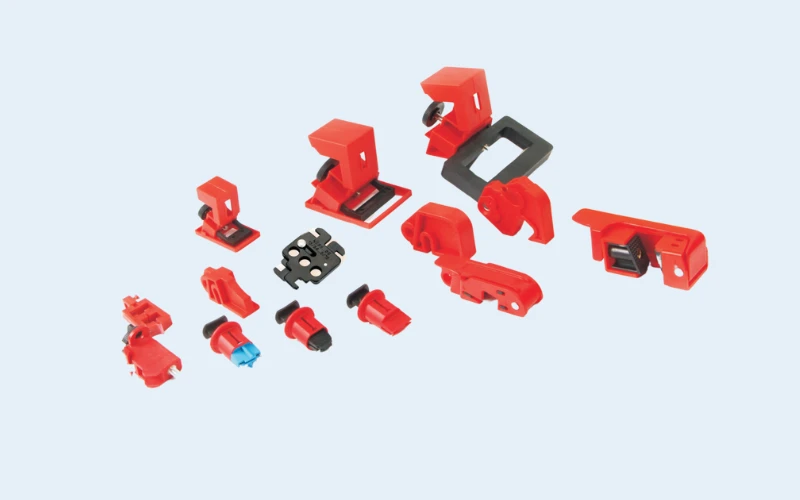
Electrical Lockout Devices
Lockout devices for electrical systems are used to protect employees while they are servicing or maintaining the electrical system. Lockout devices isolate the source of energy; therefore, protecting against the accidental energization of the circuit/machine/electrical system and thus reduce the chance of an accident or injury.
All of our electrical lockout devices have been designed for ease of operation and reliability and comply with the latest safety standards, providing a level of safety/protection to your employees from electrical hazards when working in industrial environments.
Key Benefits of Electrical Lockout Devices
These devices play a vital role in maintaining safety and control during electrical maintenance and servicing work.
Prevents Accidental Energization
Ensures equipment stays safely de-energized during servicing or repairs.
Worker Protection
Reduces the risk of electrical shock or injury.
Durable Construction
Made from high-quality plastics and metals for long-term industrial use.
Easy Installation
Quick and secure application for efficient maintenance workflows.
Compliance-Ready
Supports OSHA and international LOTO safety standards.
Shared Control
Enables multiple workers to lock out equipment for group maintenance tasks.
Applications
Electrical lockout devices are essential across industries where electrical maintenance or servicing is performed, including:
- Power generation and distribution facilities
- Manufacturing and assembly plants
- Chemical and processing industries
- Oil and gas refineries
- Construction sites
- Water and wastewater treatment plants
Implementing these devices helps organisations maintain a safer work environment while complying with lockout/tagout safety protocols.
Wide Range of Electrical Lockout Solutions
Our collection of electrical lockout devices is engineered to cover a broad spectrum of electrical systems, including circuit breakers, disconnect switches, plugs, and wall switches. Each device is designed to provide secure isolation while remaining simple to install and operate.
Whether you need compact solutions for miniature breakers or heavy-duty lockouts for industrial panels, our products ensure compliance with Lockout-Tagout (LOTO) protocols and improve workplace safety.
Talk to Our Safety Experts
Choosing the right electrical lockout devices is critical for workplace safety. Our team of experts can guide you in selecting the most suitable solutions for your facility, ensuring compliance and operational safety.
Types of Electrical Lockout Devices
We offer multiple electrical lockout options to support safe maintenance across a wide range of electrical systems.
Miniature Circuit Breaker Lockouts
Designed for small-scale breakers, these lockouts prevent unauthorized re-energization while allowing quick installation for routine maintenance.
Clamp-On Circuit Breaker Lockouts
Available in small, medium, and large sizes, clamp-on lockouts secure breakers of various dimensions, providing versatile protection for industrial equipment.
Universal Circuit Breaker Lockouts
Engineered to fit a wide range of breaker types and sizes, these lockouts offer adaptable solutions for complex electrical systems.
Electrical Plug Lockouts
Protect workers from accidental energization of electrical plugs and equipment. Ideal for both industrial and commercial settings.
Wall Switch Lockout Boxes
These devices enclose wall switches and disconnect points, preventing operation while maintenance is underway.
Specialty Lockouts
Including tool-free, twist-screw, and tie-bar lockout devices, these solutions offer flexibility for unique breaker and switch configurations.
Why Choose Our Electrical Lockout Devices?
Enhanced Safety
Reliable isolation for hazardous electrical systems.
Versatile Options
Solutions for circuit breakers, plugs, switches, and industrial panels.
Durable & Long-Lasting
Built to withstand harsh conditions and repeated use.
Quick & Simple to Use
Minimizes downtime and simplifies lockout procedures.
Compliance Guaranteed
Meets OSHA and global LOTO regulations.